Installation of live equipment in secondary distribution boxes
Live equipment in secondary distribution boxes must be installed following strict safety, clearance, and standard compliance requirements to ensure operational reliability and personnel safety.
Key Considerations for Installation
1. Safety and Standards Compliance All live equipment must comply with international and regional standards, such as IEC and EN standards, and local electrical codes. Equipment should be CE marked where applicable, and installation must respect the Low Voltage Directive for voltages from 50–1000 V AC or 75–1500 V DC, ensuring protection against electric shock, fire, and electromagnetic interference . Only new, approved equipment should be installed; second-hand equipment requires formal written approval . 2. Equipment Layout and Segregation Secondary distribution boxes typically house MCCBs, fuses, residual current devices, and busbars. Adequate clearance around live components is essential for safe operation and maintenance. Equipment operating at different voltages should be segregated to prevent accidental contact and reduce fault propagation . Space must allow for cable entry, connection, and future expansion. 3. Transformer and Busbar Integration Secondary distribution boxes are often fed from 11 kV/400 V transformers in unit substations. Transformers should be close-coupled to minimize secondary cable lengths, reducing voltage drop and losses . Busbars must be rated for the expected load, and tie breakers may be used to allow selective switching between buses for reliability and maintenance. 4. Protective Devices and Fault Management Install circuit breakers, fuses, and earth leakage protection to safeguard equipment and personnel. In secondary selective or looped systems, bus tie breakers allow automatic or manual transfer of load in case of a primary feeder failure, limiting outage duration to a few seconds . Proper coordination ensures that secondary fault currents are managed without overloading upstream equipment. 5. Physical Installation Requirements
- Maintain minimum clearances from walls and site boundaries, typically 1.5 meters or as required by local regulations .
- Use GRP or masonry enclosures depending on substation type and environmental conditions.
- Ensure ventilation for transformers and switchgear, especially in indoor installations, to prevent overheating .
- Provide oil sumps or containment for liquid-filled transformers to trap any escaping oil in case of fire . 6. Operational and Maintenance Considerations
- Design for easy withdrawal of breakers and access to busbars.
- Include intelligent monitoring for overload, earth faults, and energy management where applicable .
- Ensure that all live parts are clearly labeled and that personnel are trained in safe handling procedures.
Summary
Installing live equipment in secondary distribution boxes requires careful attention to safety, standards compliance, layout, protection, and maintenance access. Proper planning ensures reliable power distribution, minimal downtime, and protection of both personnel and equipment. Following IEC, EN, and local regulations, along with manufacturer guidelines, is essential for a safe and efficient installation .
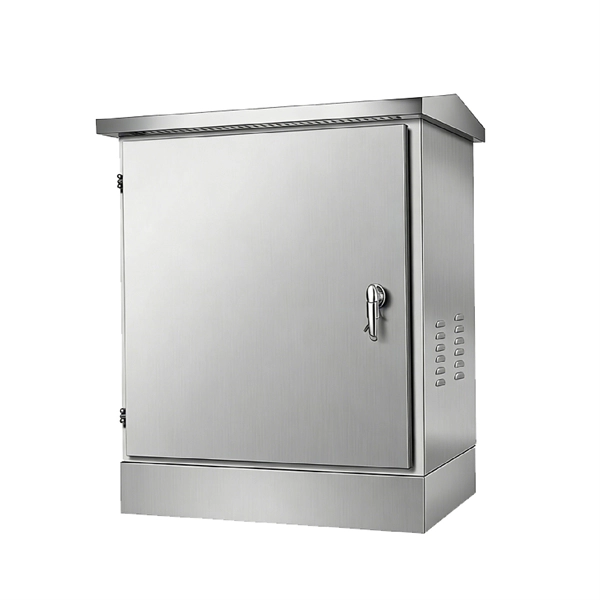 Information
 Electrical installation handbook
This electrical installation handbook, however, aims to supply, in a single document, tables for the quick definition of the main
 Information
 Standard
This publication has been prepared to assist you in planning your electrical installation. The uniform standards contained in this
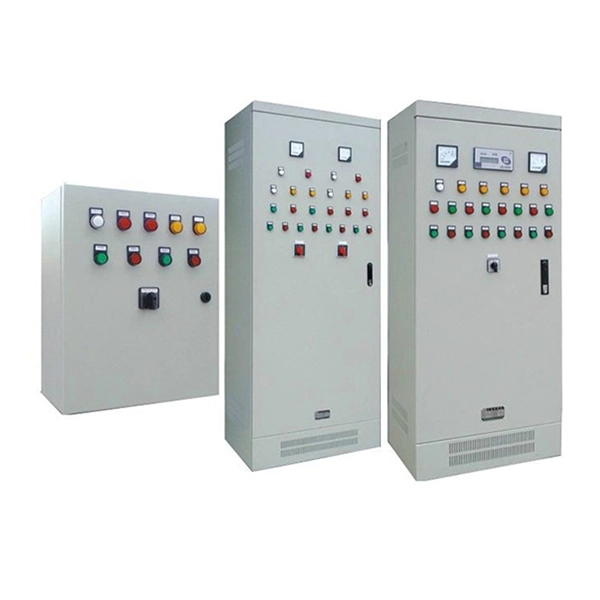 Information
 Secondary LV/MV distribution substations in a nutshell
The installation comprises secondary distribution substation at the point of entry, with MV
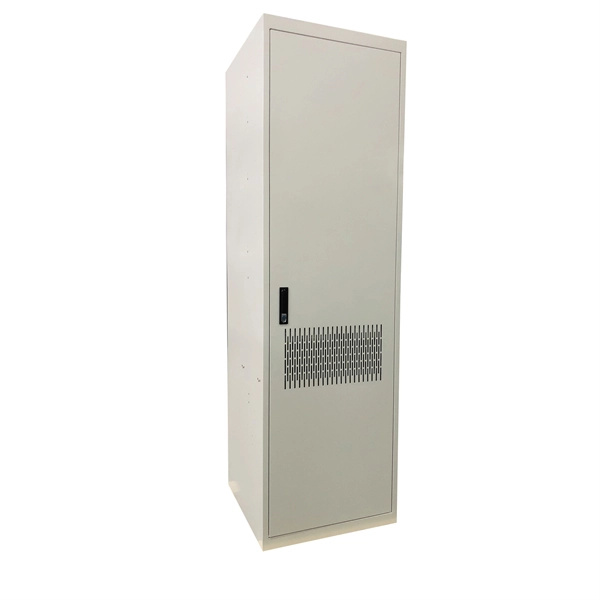 Information
 LV/MV power substation equipment and wiring
Figure 1 is an example layout. This layout is suitable for a main 11 kV substation, also
 Information
 LV/MV power substation equipment and wiring requirements | EEP
The whole system should be mechanically continuous throughout, including connections to switches, fittings,
 Information
 Primary and secondary power distribution systems
Primary distribution systems Primary distribution systems consist of feeders that deliver
 Information
 Planning of Electric Power Distribution
A special challenge is the coordination of the individual installations. Basically, the main installations are heating, ventilation, air
 Information
 Medium voltage products Technical guide The MV/LV transformer
substations with installed power limited to 2000 kVA or two 1000 kVA MV/LV transformers. The purpose of this guide is to give an
 Information
 Requirements And Specifications For Installation Of Distribution Boxes
In flammable and explosive environments, explosion-proof distribution boxes should be selected and explosion-proof
 Information
 Secondary Substation Installation Guide | PDF | Electrical
This document outlines SP Energy Networks'' installation and commissioning specification for ground mounted secondary substations
 Information
 Power System Equipment
Distribution Substations 5 The substation transformer is one of the most expensive pieces of equipment at the distribution level.
 Information
 Standard installations électriques_Version du 28-06-2016
The equipment supplied must be as listed in Section 14, Standardisation of the equipment; all equipment proposed not appearing in
 Information
 Planning and installation of the low voltage switchgear
The following aspects should be considered in particular when planning low-voltage main distribution system: Point №
 Information
 The installation requirements for the distribution box
Learn how to install a distribution box safely and correctly. Covers wiring, placement, standards, and expert tips for a
 Information
 Ten equipment you MUST recognize in every
The following equipment are installed in distribution substations: distribution transformer,
 Information
 Installation requirements for distribution boxes
Installation of closed or explosion-proof electrical facilities; distribution box electrical components, meters, switches and
 Information
 secondary distribution box,Class IIdistribution box-Ayump Electric
In other words, each equipment has its own separate distribution box, which is called three-level distribution box. Then, several three
 Information
 Business Documentation (DBD)
This document applies to telemetry systems suitable for monitoring voltage, current and other calculated parameters such as power
 Information
 Secondary Substation Installation and SUB-02-006 2. ISSUE RECORD
Primary and Secondary Substations Protection and Control Equipment 11kV and 6.6kV Protection and Control Settings Guidance
 Information
 Power Distribution Boxes Explained Simply
Discover the essentials of a Power Distribution Box—how it works, key types, benefits, and
 Information
 Installation and Wiring of High and Low Voltage Explosion-Proof
See the diagram for the connection between the tray and the box. B. Secondary Circuit Wiring of High and Low
 Information
 Transformer and Distribution Cabinet Equipment
2.1 Pre-installation Requirements for Complete Distribution Cabinets, Control Cabinets, and
 Information
 Secondary unit substations design guide
An ATC uses a cable connection on either the primary side, secondary side or both, and is placed between the
 Information
 Secondary Substation Installation and SUB-02-006 2. ISSUE RECORD
The HV & LV Earth system shall be installed and tested in accordance with the EART-03-003 noting requirements for non-standard,
 Information
 LV/MV power substation equipment and wiring requirements | EEP
The HV & LV Earth system shall be installed and tested in accordance with the EART-03-003 noting requirements for non-standard,
 Information
 Summary of key points for construction and installation of distribution
The construction and installation points of distribution boxes and switch boxes are summarized as follows: 1. Select qualified